12 Trade Show Booth Design Trends That Actually Get Attention Now
 By
By Trade show booths used to rely mostly on one thing: being bigger than everyone else nearby.
The obvious tools that most booths use are more lights, more banners, and definitely more printed graphics. But that can also make the visuals mundane rather than highlighting the key message.
The trend implies that we need to change the trade show booth design trends. Remember all the booths try to create unique visuals. However, the booths that actually stand out today are usually the ones that feel intentional rather than chaotic.
Simultaneously, the attendees have changed, too.
In my experience, people no longer just want free tote bags and awkward sales conversations. Instead, they want:
- experiences,
- interaction,
- clarity,
- visual identity,
- something memorable enough to photograph, and
- something that does not feel painfully corporate.
That shift has significantly changed booth design trends over the last few years. The shift intensified after brands realized trade shows are no longer just physical events.
Also, they are in social media environments now. On that note, I’ll break down the most relevant trade show booth design trends in detail.
Stay tuned.
12 Trade Show Booth Design Trends That Actually Get Attention Now:
So without wasting time, let’s check out the most relevant trade show booth design trends of 2026:
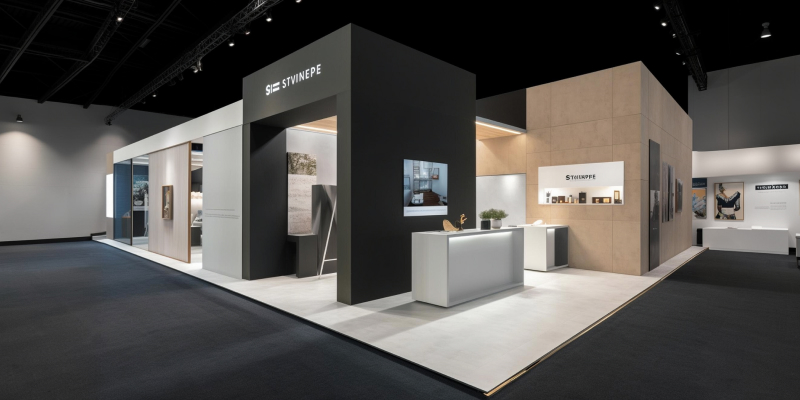
1. Minimal Booth Design Is Winning More Attention:
This surprises companies constantly. Many brands still assume that more graphics mean greater impact. But usually, the opposite happens now.
For instance, at technology trade shows in Las Vegas, we have seen brands increasingly adopt a modern, flamboyant approach. Again, this is a unique approach that offers a smooth overall experience.
Moreover, modern trade show booths increasingly lean toward:
- cleaner layouts,
- fewer visual distractions,
- larger negative space,
- stronger focal points, and
- simplified messaging.
This is because attendees process environments incredibly fast while walking crowded convention floors.
Also, if the booth visually overwhelms people within two seconds, many simply keep walking. As a result, the strongest booths now often communicate:
- Who is the company?
- What do they do?
- Why does it matter?
Again, the message reaches the audience within only a few seconds. That too, without forcing visitors to decode a wall full of marketing language first.
2. Interactive Booth Experiences Matter More Than Static Displays:
People remember experiences far more than printed messaging. That is why interactive booth design continues to grow everywhere.
This includes:
- Touchscreens.
- Live demos.
- Immersive displays.
- Product testing.
- Interactive installations.
- Motion-based experiences.
- Digital walkthroughs.
Major Las Vegas technology trade shows like CES, InfoComm, and Black Hat seamlessly use featured tech, such as demo-facing graphics and aisle-facing booths.
However, this is not because technology automatically impresses people. The reality is that bad tech experiences actually feel exhausting very quickly.
As a result, you will see that interaction naturally creates engagement when done properly, especially at crowded expos where attendees have already spent hours walking past static displays, hearing the same sales language endlessly.
3. Open Booth Layouts Are Replacing Closed Structures:
Older booth designs often felt intimidating unintentionally. To clarify, elements such as large walls, enclosed meeting spaces, and obstructed visibility are often the issues.
Now brands increasingly prefer open layouts because attendees hesitate entering spaces that feel restrictive or overly sales-focused.
Moreover, open booth concepts create easier movement, better visibility, more casual interaction, and lower psychological pressure.
Meanwhile, people approach booths more willingly when they do not immediately feel trapped inside a lead-generation ambush.
Also, trade shows have become more socially experience-driven, so booth accessibility matters more now.
4. LED Walls And Dynamic Visuals Keep Expanding:
Printed backdrops still exist, obviously. But dynamic visuals now dominate larger exhibitions because movement naturally attracts human attention more quickly than static graphics.
Moreover, brands are increasingly using LED walls, animated branding, looping product visuals, immersive video environments, motion graphics, and real-time presentations. This is especially true for technology companies.
Having said that, the important part, though, is that good visuals support the booth experience. They should not feel like you are trying to highlight several aspects like a tagline, mission & vision, and a to-do list in one visual layout.
Remember that overuse becomes exhausting quickly.
5. Sustainability Became A Serious Booth Design Trend:
Not just performative “green branding.” Actual sustainability conversations are now affecting booth construction, especially for companies attending multiple trade shows each year.
Most importantly, brands are increasingly looking for:
- Reusable booth systems
- Modular displays
- Recyclable materials
- Lightweight structures
- Digital handouts instead of printed materials
- Reduced shipping waste
Most traditional trade show setups often generate absurd amounts of temporary waste for events lasting only a few days.
However, today, the attendees increasingly notice sustainability choices. This occurs more in industries that already publicly discuss environmental responsibility.
6. Modular Booth Designs Are Growing Fast:
Companies want flexibility now. Instead of rebuilding from scratch for every event, brands increasingly use modular booth systems that adapt to:
- Different booth sizes
- Venues
- Layouts
- Multiple event types.
That saves shipping costs, setup time, production expenses, and operational stress, especially for businesses attending multiple conferences annually.
Again, note that flexibility matters more now because trade show budgets are under heavier scrutiny in many industries.
Brands want booth systems that scale efficiently rather than requiring constant, massive redesigns.
7. Social-Media-Friendly Booth Design Is Everywhere:
Brands actively design booths hoping attendees will photograph them organically. That changes design decisions significantly.
Now booths often include branded photo areas, immersive lighting, visually distinctive installations, statement walls, interactive moments, and aesthetically designed product displays.
Because one attendee posting booth content online potentially creates exposure far beyond the physical event itself.
Also, trade shows are no longer isolated offline experiences. Every booth now competes in both – on the event floor and inside social feeds afterward.
8. Hospitality Spaces Became More Important:
People underestimate how physically exhausting trade shows are. In fact, attendees spend hours walking, networking, processing information, navigating crowds, and having repetitive conversations.
So booths that feel psychologically comfortable naturally attract more engagement. And that is why many modern booth designs now include:
- lounge seating,
- charging stations,
- softer lighting,
- coffee areas,
- conversational spaces, and
- relaxed meeting zones.
Please note that this is not applicable to aggressively branded “sales zones.”
In fact, comfort significantly increases dwell time. And longer booth engagement usually leads to better organic conversations.
9. Lighting Design Matters More Than Most Brands Realize:
Bad lighting quietly destroys booth design. In fact, this happens constantly.
For instance, a beautifully designed booth with harsh convention-center lighting suddenly looks flat, cold, or visually chaotic.
As a result, good lighting helps to create:
- atmosphere,
- focus,
- depth,
- product visibility, and
- visual hierarchy.
Moreover, modern booths increasingly use lighting strategically instead of treating it as a technical afterthought.
This is especially because attendees instinctively gravitate toward environments that feel visually comfortable in overstimulating expo halls.
10. Smaller Booths Are Getting Smarter:
Not every company has an enormous budget anymore. Interestingly, some smaller booths now outperform giant booths simply because the experience feels more focused.
However, a well-designed, smaller booth often succeeds through:
- strong branding clarity,
- clean visual identity,
- interactive engagement,
- strategic lighting, and
- smart space usage.
Rather than trying to imitate oversized corporate exhibits badly, people remember distinctive experiences more than square footage.
11. Trade Show Booths Are Becoming More Human:
This is probably the biggest overall shift underneath everything else.
So, older trade show booths often felt aggressively corporate, scripted interactions, hard sales pressure, overloaded branding, and transactional energy.
Now, modern attendees respond better to booths that feel approachable, conversational, visually intentional, emotionally engaging, and less exhausting.
Moreover, people want interaction now, not interrogation. And that changes everything, including layout, staffing, lighting, visuals, seating, and messaging.
12. Technology Is Still Growing, But Simplicity Is Winning:
Simplicity and minimalist designs are the most eye-catching. However, a lot of brands assume that more technology automatically means a better booth experience. But not necessarily.
Usually, bad technology creates friction very quickly. Again, that is mainly due to lagging screens, confusing interactions, overwhelming interfaces, and technical glitches.
Moreover, the best booth technology usually feels intuitive almost immediately. Visitors should not need instructions just to understand what is happening.
Also, simple experiences consistently outperform overcomplicated ones in crowded trade show environments.
So, What Are The Biggest Trade Show Booth Design Trends Right Now?
The most successful trade show booth design trends today revolve around:
- cleaner visual design,
- interactive experiences,
- open layouts,
- modular systems,
- sustainability,
- social-media-friendly environments,
- human-centered engagement, and
- immersive but simple experiences.
Why? This is because trade shows have changed. People no longer stop at booths simply because they are loud or oversized.
Instead, they stop because something feels interesting, comfortable, visually distinct, or genuinely worth experiencing.
Read Also:
What's your reaction?